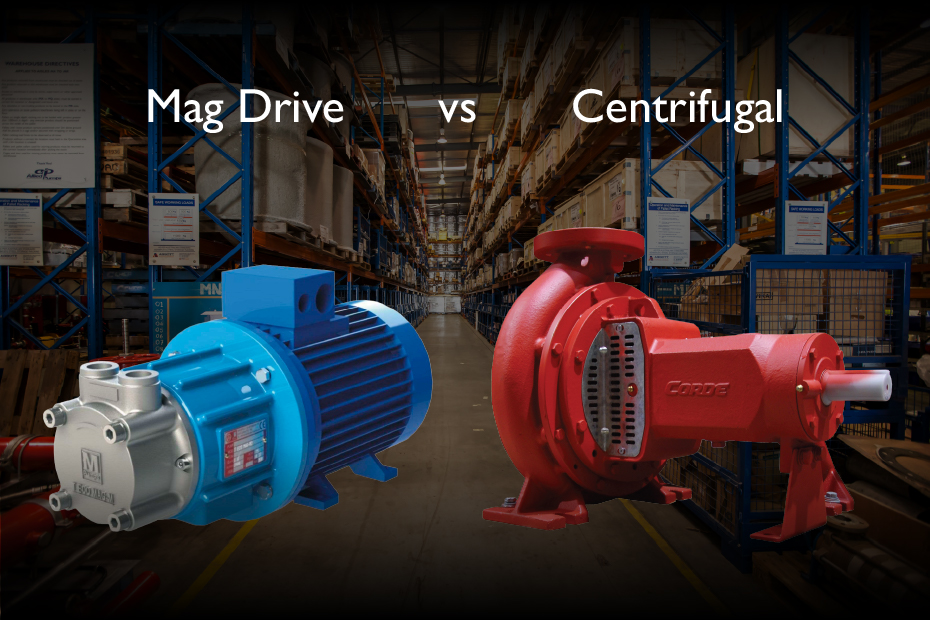
Choosing the right pump is key to efficiency and safety in industrial operations. This guide compares magnetic pumps vs centrifugal pumps, highlighting their performance, maintenance, and applications. Everything you need to know to select the best pump for your site.
Centrifugal pumps use a rotating impeller to impart kinetic energy to the fluid, creating flow and pressure. The impeller is mounted on a shaft that passes through the pump casing, typically sealed with mechanical shaft seals. These seals prevent fluid from leaking along the shaft, but they are a common point of wear and failure.
Magnetic drive pumps, on the other hand, eliminate the need for shaft seals by using a magnetic coupling. The impeller is enclosed within a sealed chamber, and torque is transmitted from an external magnet to the impeller inside. This seal-less design reduces the risk of leaks and exposure to hazardous fluids.
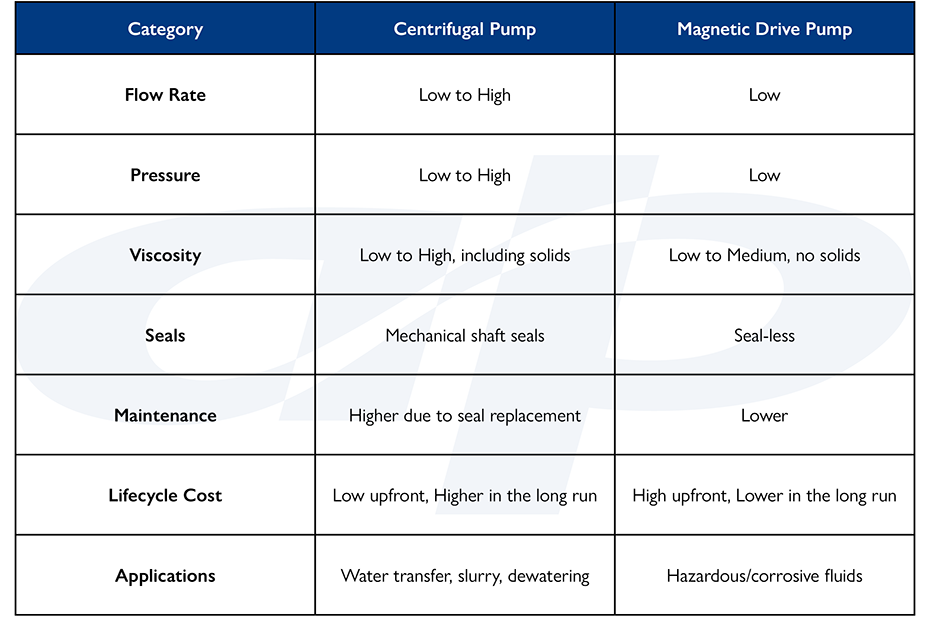
Centrifugal pumps are highly versatile and capable of handling both high to low pressures and flow rates. They are generally efficient with clean low-viscosity fluids, but their robust design also allows them to handle higher viscosity fluids or even solids.
By contrast, magnetic drive pumps are only designed to handle clean low viscosity fluids, particularly corrosive or hazardous ones. While they offer reliable and efficient performance, their flow rates and pressure capabilities are typically lower than that of centrifugal pumps.
Centrifugal pumps rely on mechanical shaft seals, which are wear components that require regular inspection and replacement. Seal failure can lead to leaks, unplanned downtime, and ongoing costs for spares and labour. While centrifugal pumps offer lower upfront costs, their maintenance and repairs can significantly increase the pump’s lifecycle costs.
Magnetic drive pumps eliminate shaft seals, reducing routine maintenance, spare parts, and the risk of unexpected shutdowns. While they typically have a higher upfront purchase cost, the reduced maintenance requirements and improved reliability can lower total lifecycle costs. This makes them particularly useful for continuous-duty or hazardous fluid applications.
Centrifugal pumps are best suited to applications requiring high flow rates, higher pressures, or the handling of fluids with varying viscosity, temperature, or solids content. Common uses include water transfer, cooling circuits, slurry handling, dewatering, and general process pumping across mining, manufacturing, and utilities.
Magnetic drive pumps are preferred where leak prevention is critical and fluids are clean but hazardous or corrosive. Typical applications include chemical transfer, acids and solvents, chemical dosing, and process lines where safety, environmental protection, and reduced maintenance outweigh the need for high flow or pressure.
Choosing between magnetic pumps vs centrifugal pumps depends on your application, fluid characteristics, and operational priorities. Our team of experts can help you find the best solution for your industrial or mining site. At Allied Pumps, we stock some of the most reliable brands and hold a large stock of spare parts and accessories in our Canning Vale warehouse.
Explore our range of magnetic drive pumps and centrifugal pumps. For any additional questions, please contact our team.

Contact us to learn about how we can help you with your pump needs.
CALL US NOW EMAIL US