





Plastic pollution impacts every country across the globe. And unfortunately, Australians are among the highest waste producers in the world. We generate over 50 million tonnes of rubbish each year. With a population of 24 million, that’s over two tonnes per person. 40 percent of this rubbish is either being dumped into the environment or sent to landfill where it cannot be recycled.
Rubbish is a waste of resources. It produces greenhouse gasses, takes up landfill space and contaminates surrounding land and waterways. Waste is a threat to marine life, killing thousands of seabirds and mammals each year.
Plastic bag usage continues to grow and impact the environment
Worldwide, one trillion plastic bags are used and discarded annually. Australians use an estimated five billion plastic bags a year. That’s over 20 million new bags used every day. An estimated 3.76 billion bags, or 20,700 tonnes of plastic, are disposed of in landfill sites throughout Australia every year. Australians dump 7,150 recyclable plastic bags into landfills every minute or 429,000 bags every hour.
Plastics are infiltrating our oceans at an alarming rate. About 46 percent of plastics float (EPA 2016). It can float for years before eventually concentrating in the ocean gyres.
In 2004, researchers found six pounds of plastic for every pound of plankton in the North Pacific Gyre. In 2008, researchers from Algalita Marine Research Institute found 42 pounds of plastic for every pound of plankton. That’s eight times more plastic in just four years.
A recent study by the Ellen MacArthur Foundation and the World Economic Forum claims that the equivalent of one dump truck full of plastic enters the ocean every minute. Scientists estimate that there will be more plastic in the ocean than fish by 2020 unless we drastically change our plastic habits.
Around 50 million bags enter the Australian litter stream every year. Unless they are collected, they remain in the environment and accumulate at a staggering rate. If these 50 million plastic bags were made into a single plastic sheet, it would be big enough to cover the Melbourne CBD.
Keeping bags out of our waterways
It takes between 500 to 1000 years for plastic to degrade. The ban of plastic bag isn’t nationwide yet. Even though it probably is imminent, what can we do to combat the bags from the past?
Recently, we supplied a gross pollutant trap to treat run-off from the Wembley-Jollimont catchment. This was installed to reduce the amount of sediment and polluted stormwater entering Lake Mabel Talbot. The City of Subiaco is combating plastic bag pollution and protecting the water quality.
City of Subiaco seeks to reach new water quality heights and limit plastic infiltration
Lake Mabel Talbot is a conservation category wetland under EPA policy. It functions as a water corporation compensating basin. The City of Subiaco wanted to install a Gross Pollutant Trap (GPT) at the northern end of Mabel Talbot Park to treat stormwater prior to it entering the lake. The lake collects rainfall runoff from four sub-catchments, totalling 300 ha. The GPT needs to treat the entire flow prior to entering the system. With these site constraints, there were many considerations.
The City of Subiaco, through its participation in the CRCWSC, identified various locations to improve water quality across the city. Because the lake is protected by EPA policy, it was an important location to reduce pollutants.
The City of Subiaco needed a Stormwater Quality Improvement Device (SQID) to support flows in excess of 1,000L/s for a large catchment area (300ha). The catchment gathers a large amount of leaves and other pollutants from surrounding areas. This includes areas where recent weather conditions had caused increased algae bloom as the large leaf collection decomposes into the water treatment systems.
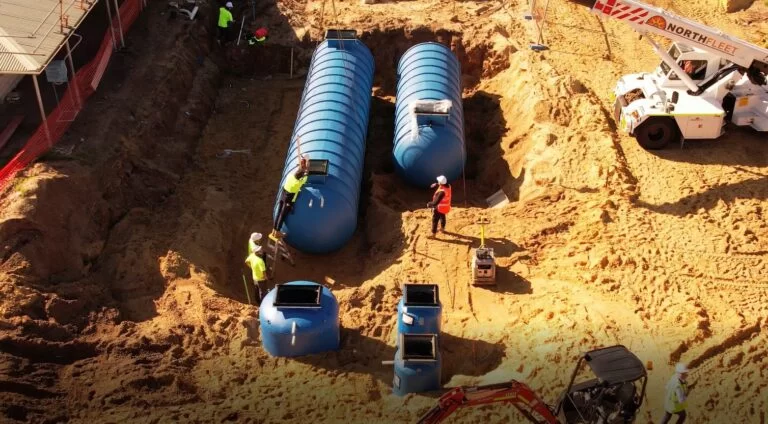
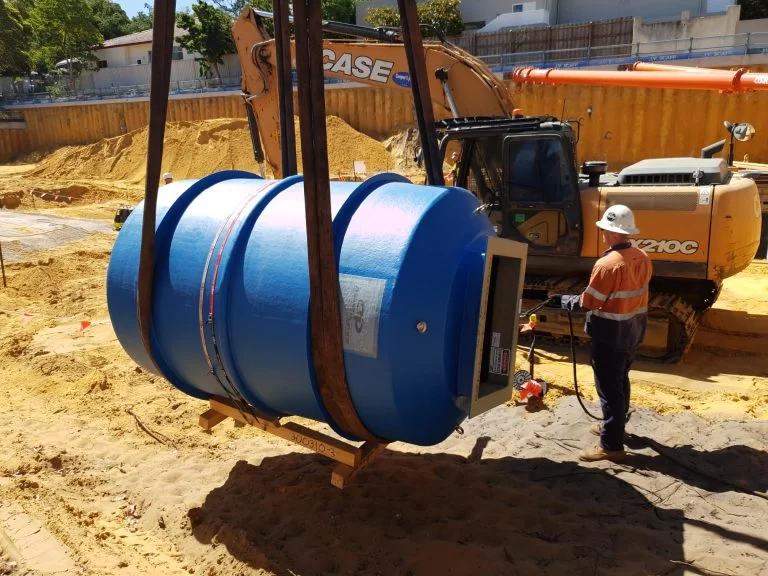
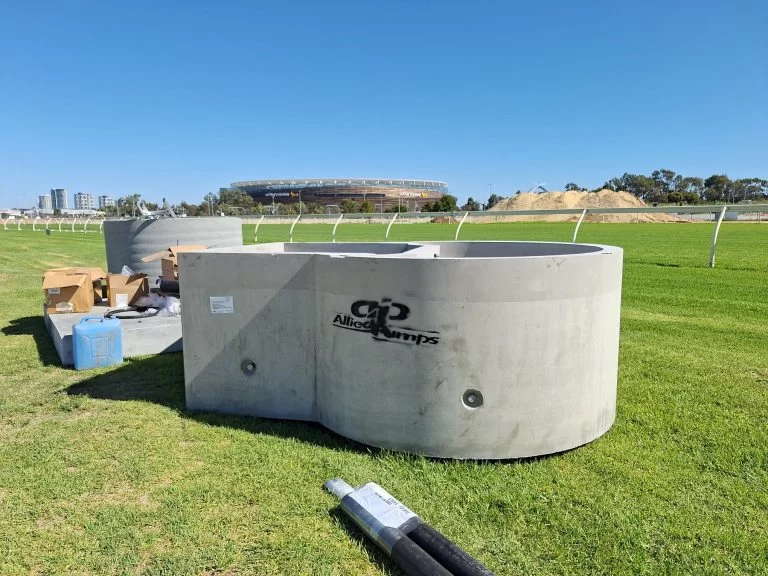
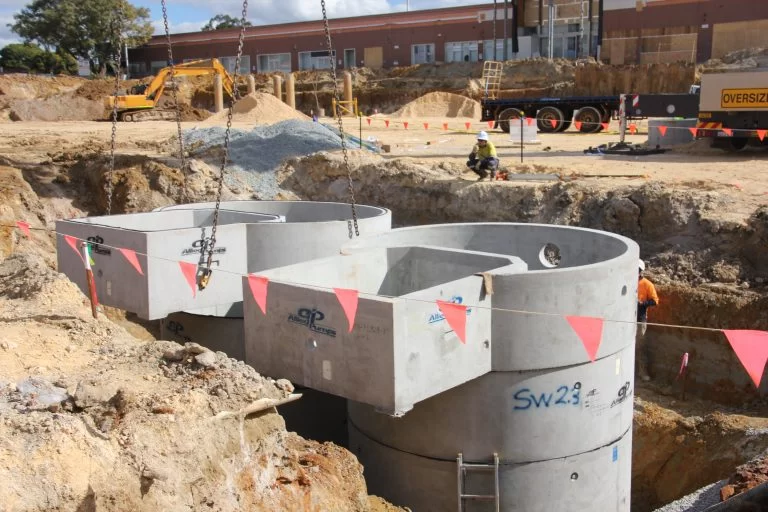
The SPEL Baffle Box was the only system to appropriately meet the design criteria. At more than five metres long and four metres wide, the baffle box is the largest of its kind in Western Australia.
Various road permits were required as authorities escorted the concrete GPT from our warehouse in Canning Vale. Power lines had to be lifted and a specific route planned to allow the GPT passage to Subiaco.
Find out more about our environmental water solutions for water filtration, sewage treatment, stormwater and oily water processing, and also offers for recycle and reuse systems.