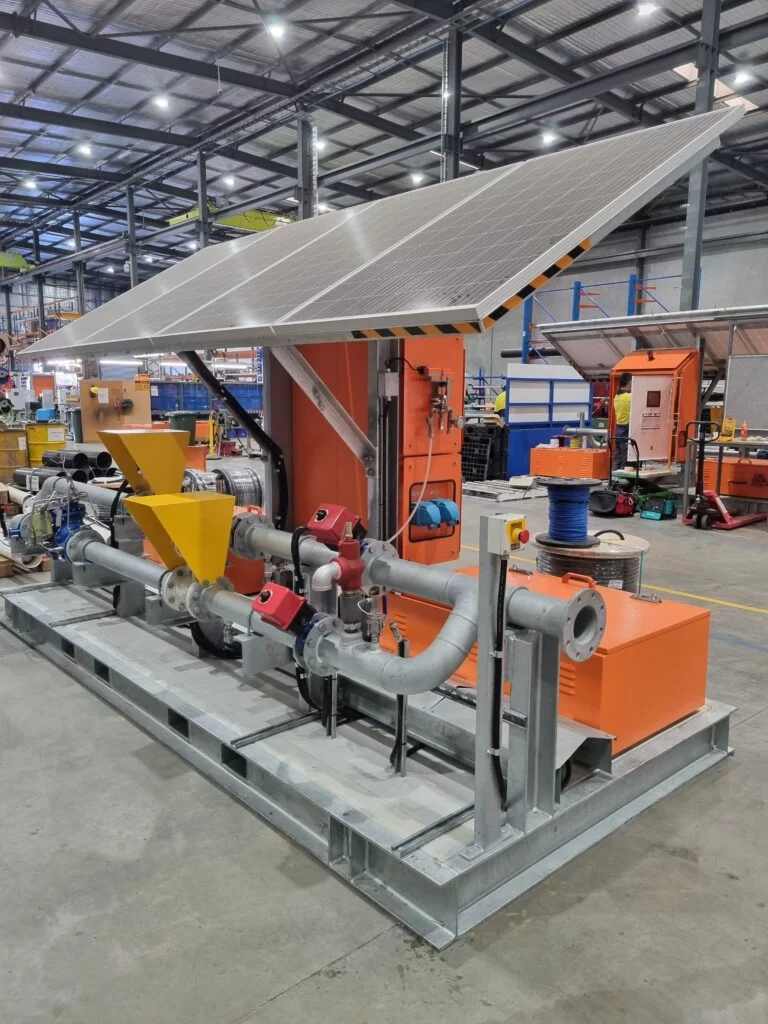
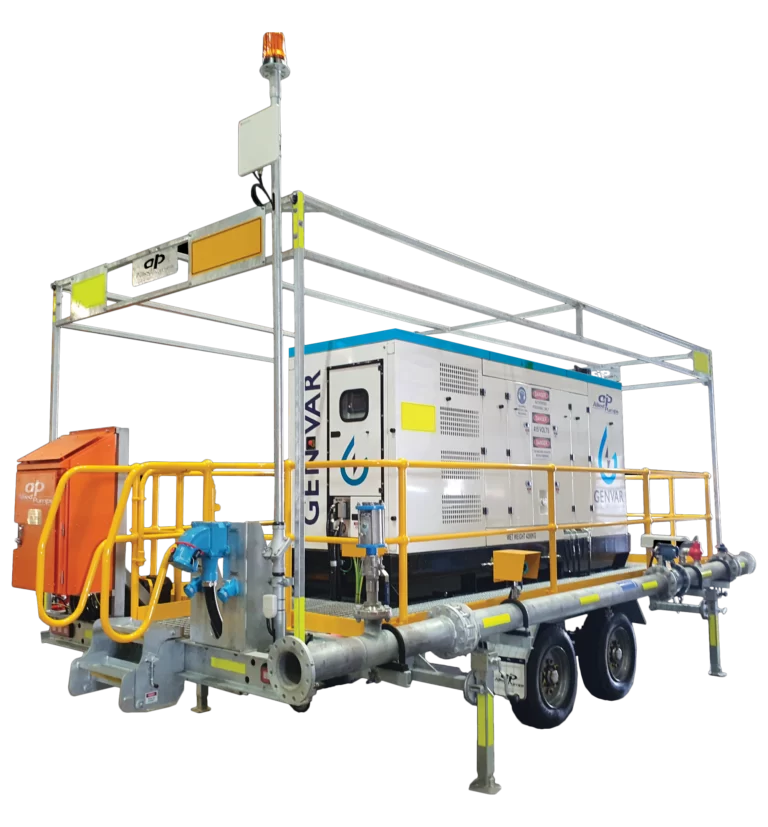
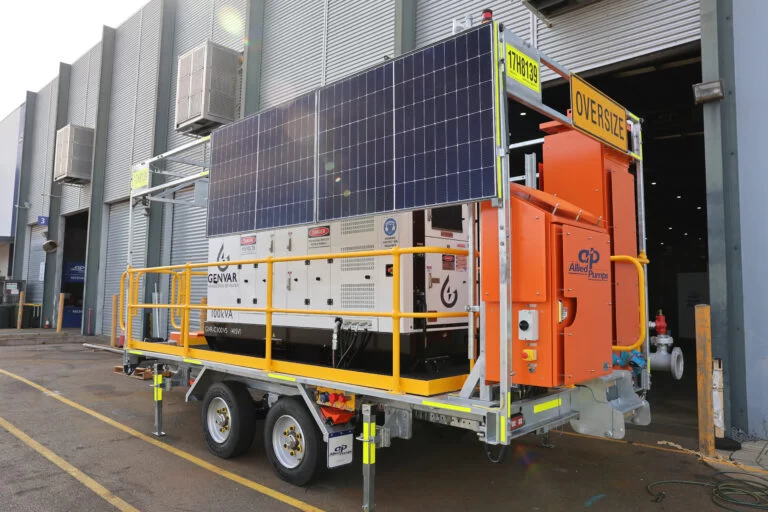
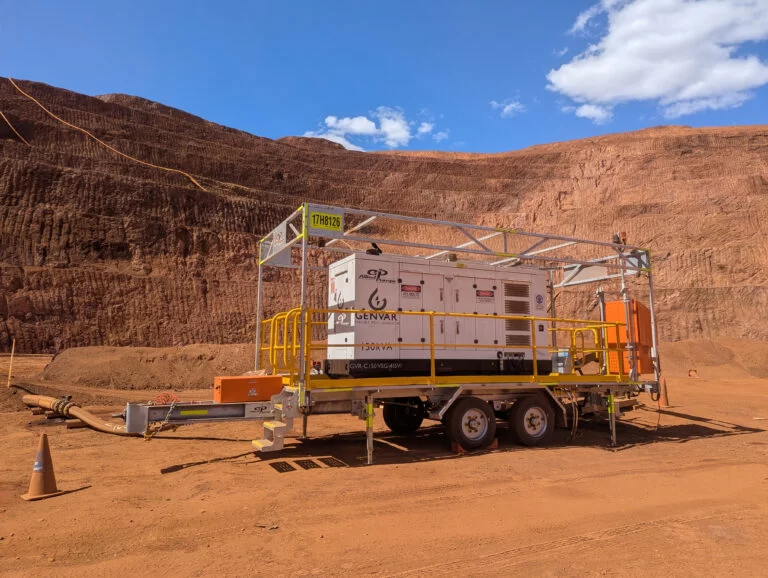
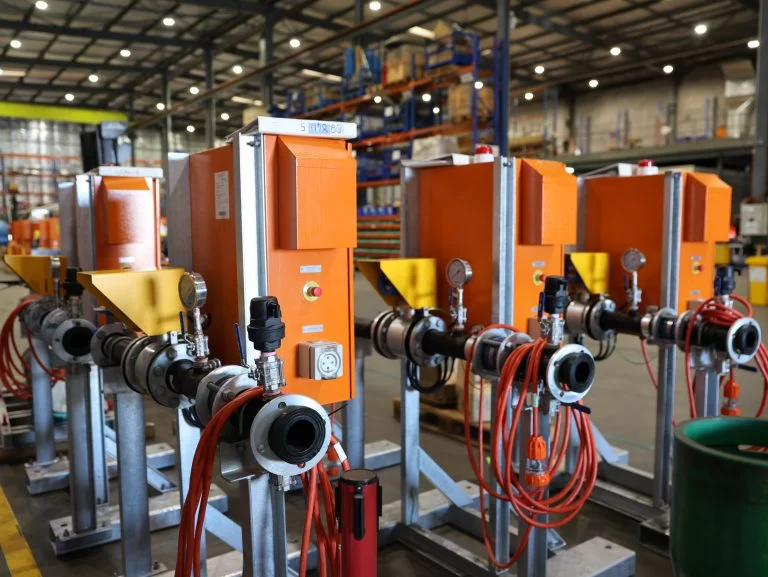
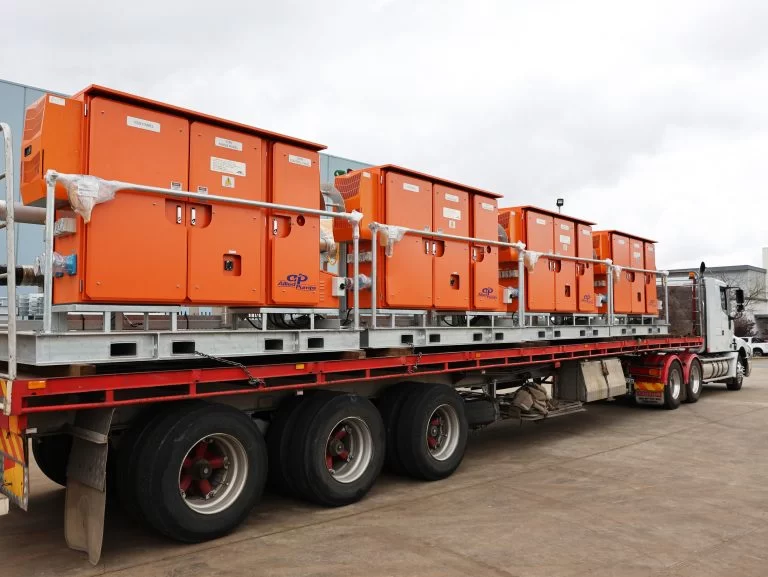
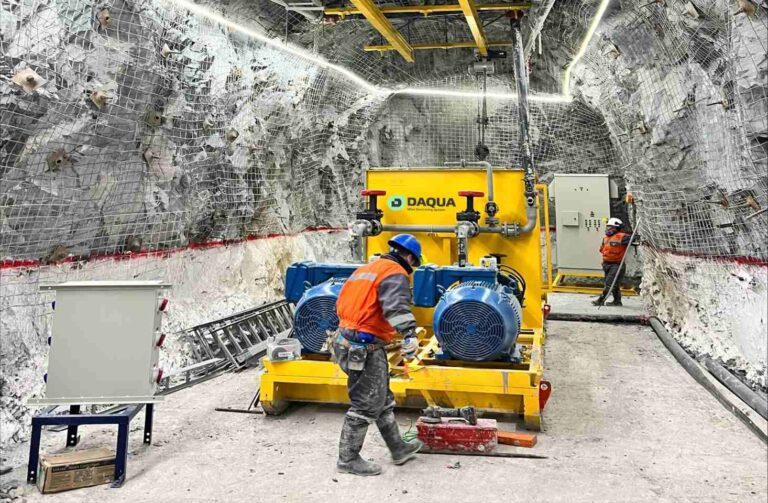
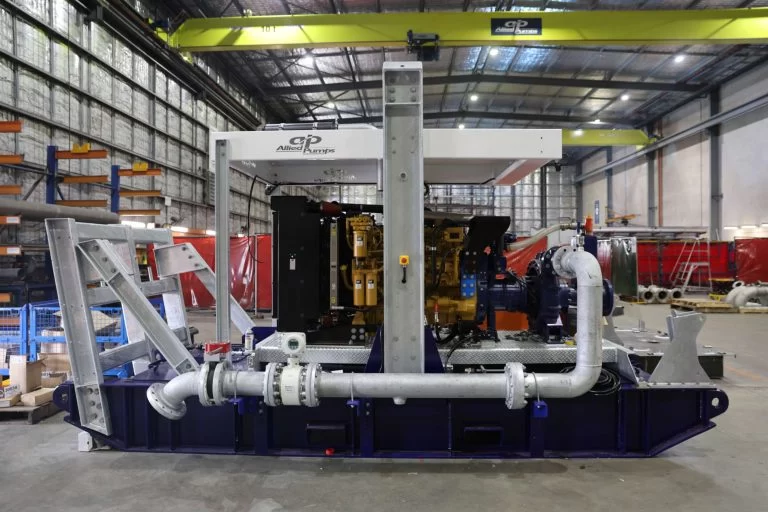
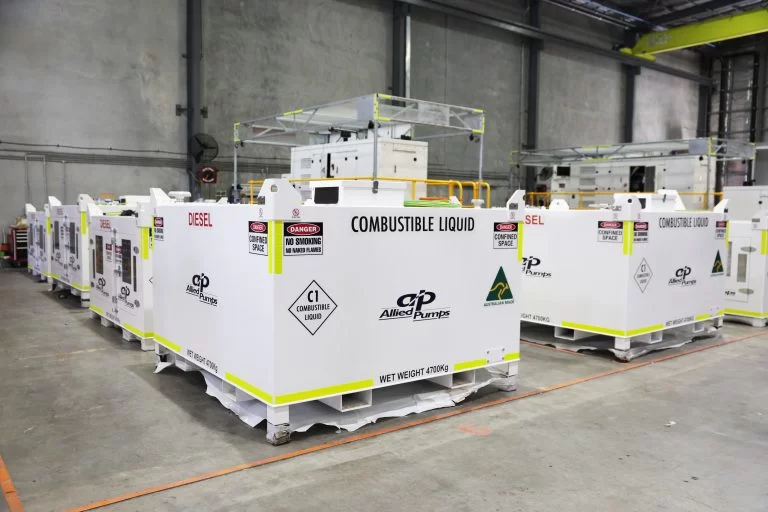
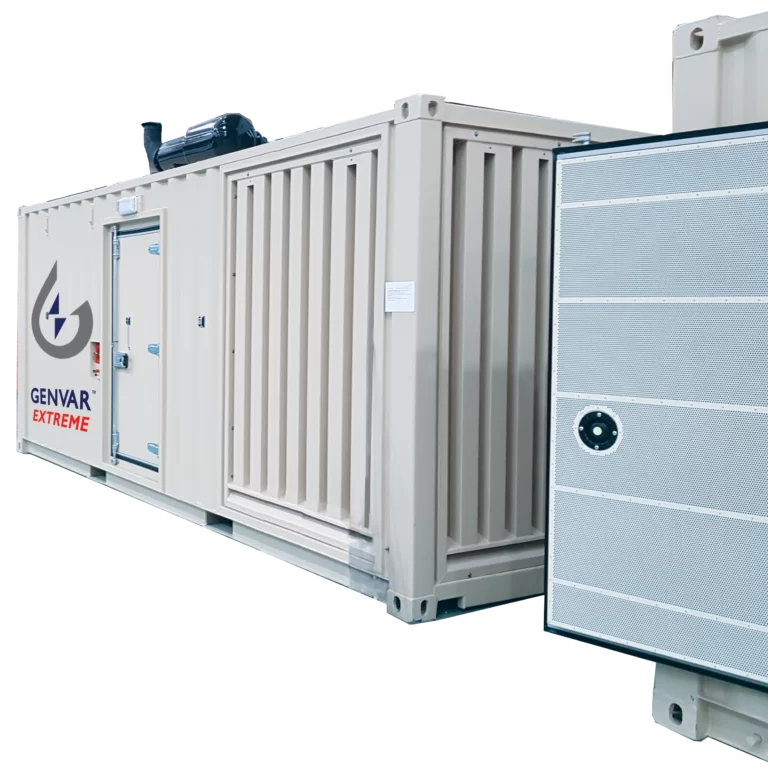
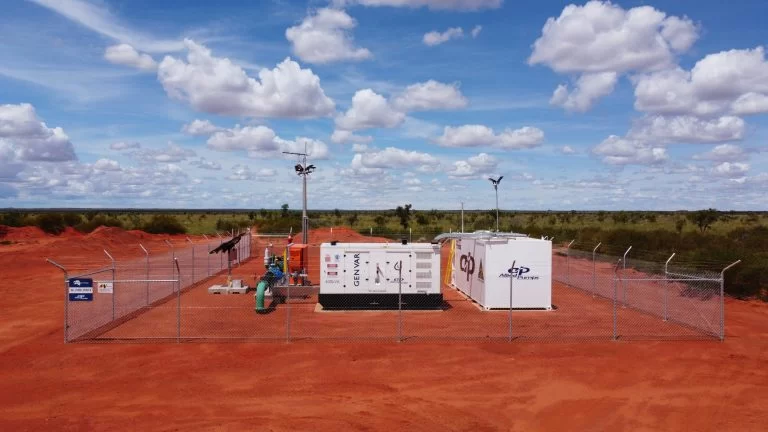
Allied Pumps designs fuel tank packages to support diesel generators used for bore dewatering, water transfer, pumping systems and other off-grid operations where dependable power is essential.
Our diesel generator fuel tanks come skid-mounted for ease of transport and are available in various capacities. 4,000 L is our standard build, but we offer larger sizes on request.

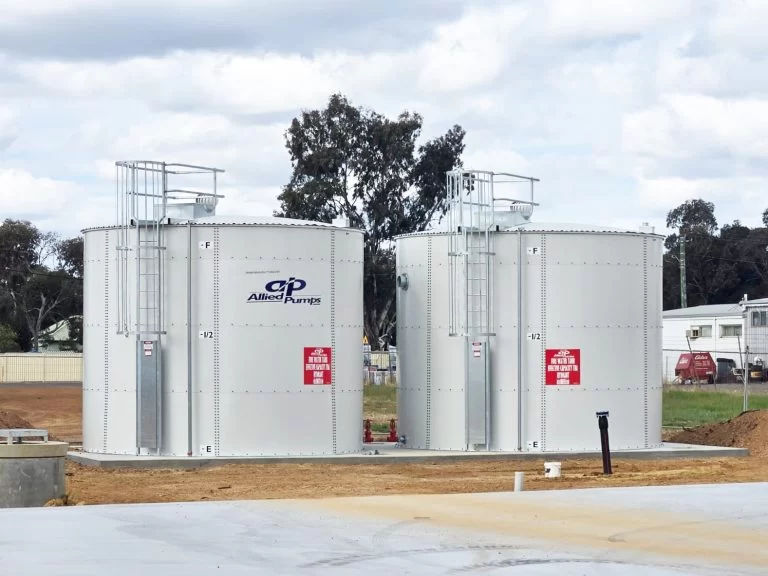
Our client required new potable water and fire water storage tanks to be manufactured onsite. The location is particularly close to the harbour shoreline and situated in the category 5 cyclone region, which means winds can be in excess of 280 km per hr. This impacted every facet of design. We had extensive contact with suppliers to find alternative products that could withstand the aggressive environmental location. The process included a search for tank wall, nuts, and bolts all the way through to paints and roofing materials. We successfully installed all the equipment on schedule, within a 3 week period with no major disruptions or safety incidents. The tank construction was guaranteed for 25 years. The client was very satisfied with the end solution.

Formed in 1905 to obtain, treat and distribute water supplies, the Bunbury Water Board has served the people of Bunbury for over 100 years. The city’s early settlers knew of water stored naturally underground and tried to use it to replace the Collie River and the Preston River, which were the only sources of water for drinking in those days. We supplied the first variable speed system to the water authority. It’s still being used today.

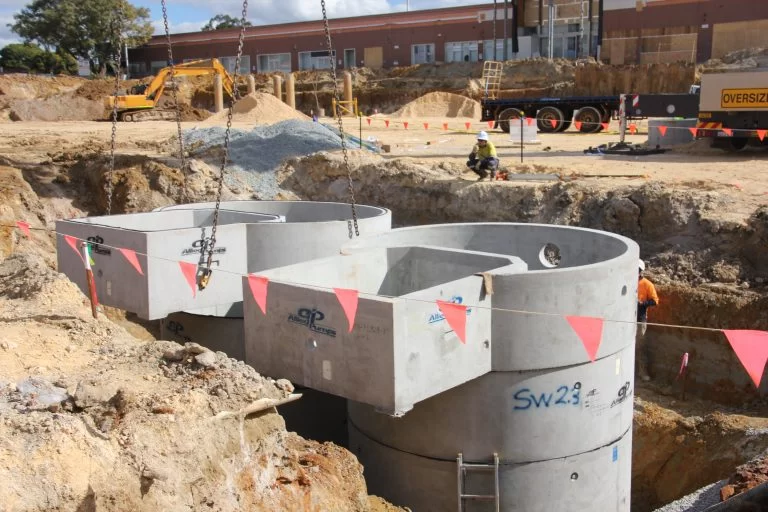
The City of Subiaco had an initiative to improve water quality. The focus was on reducing pollutants in Lake Mabel Talbot. The lake is in the conservation category wetland under the Environment Protection policy and functions as a Water Corporation compensating basin. The lake collects rainfall runoff from four sub-catchments, totaling 300 ha. A Gross Pollutant Trap needed to treat the entire flow prior to entering the system, and our Baffle Box was the only system to appropriately meet the design criteria. The Baffle Box was able to catch leaves and other pollutants before they could enter the lake. The result of this project was cleaner water and an improvement in the water quality.

The Australian Embassy in Jakarta, Indonesia required a water supply system. Because of its location, this was a very unique project. The spec required the materials to be stainless steel and fibreglass to resist corrosion. The site also needed a controller to monitor and operate water supply valves to fill tanks for use at the building. The three water supplies were the result of rainwater runoff from the roof, bore pumps and mains piping. To ensure that the specs were met, the valves were programmed to operate depending on the supply availability. The competing requirements of this project as well as working in a foreign environment created a number of challenges. We were able to rise to the challenge, through our strong organisational skills and execution of work.

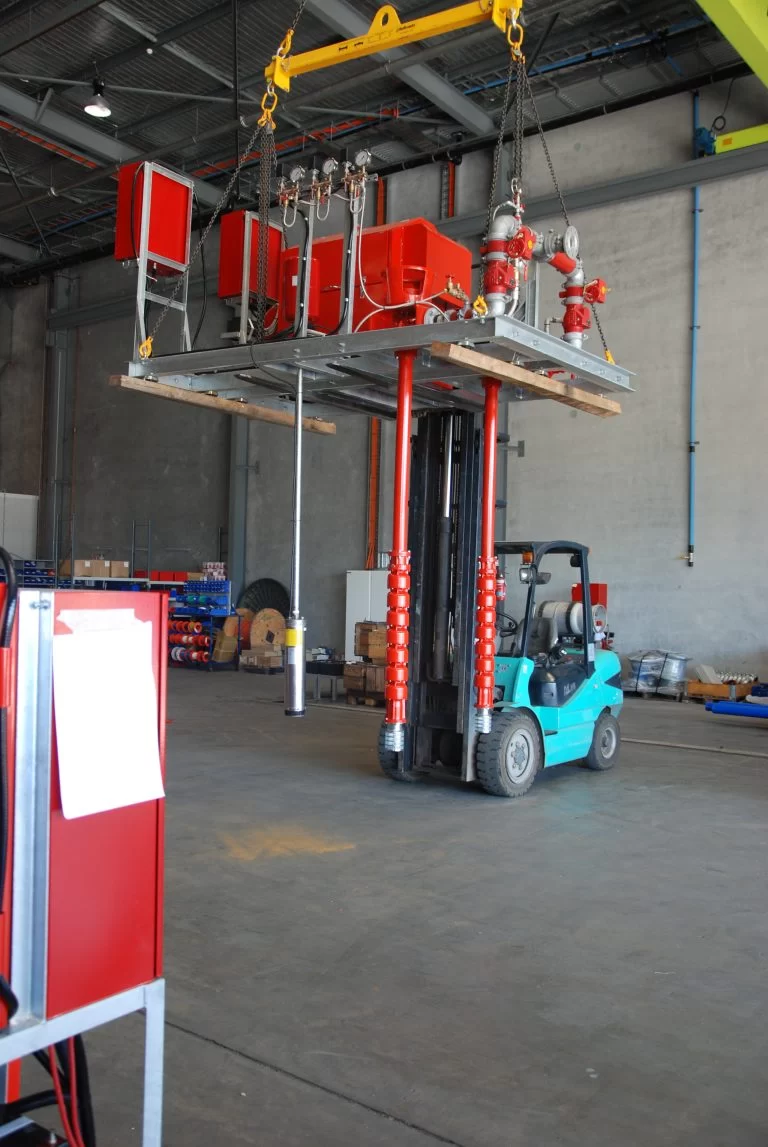
We were recently involved in supplying fire protection for Perth Airport. View the video to see the testing DFES conducted at the facilities in March 2017.

Due to the hot weather that is common throughout the year in the Pilbara region, water stored in potable water tanks can often reach temperatures in excess of 40 degrees. This is unacceptable for applications such drinking and eye wash stations and we needed to come up with a solution to accommodate this. We also provided the fire protection for a new Sino Iron Steel Warehouse in a tight 6 week deadline. Keep an eye out for the Fire Protection provided and find out more about the Eye Wash Station below.

The proposed fibreglass storage tank had an extended lead time of 14 weeks. To ensure schedules were kept, we recommended a galvanised tank, which was a first for us. This was an experience of trial and learning. Everything went smoothly providing the client with a viable solution within the requested timeframe.

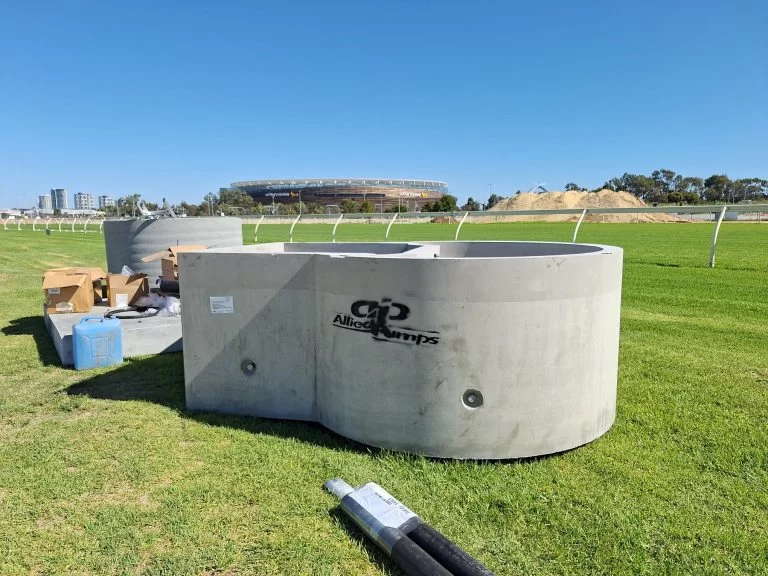
Located on the Burswood Peninsula, the Optus Stadium is part of a large redevelopment that has become a draw card to thousands of people. However, as with all new developments there was a significant change to the existing landscape. Part of the Optus Stadium is bounded by the Swan River and river traffic, some of the retaining walls and steel piles on the water’s edge which could be seen from the water and needed to be addressed which could not be achieved using a land based planting scheme or additional construction. Allied Pumps created an environmentally sound and sustainable floating treatment wetland that can be configured in rafts of endless configurations. They can fit any existing space or water body shape and can operate in fluctuating water levels which was an essential requirement for this project. While the floating treatment wetlands are primarily a water treatment tool, they have the added bonus of being visually appealing with the use of wetland sedges, rushes and grasses providing fast and easy to install beautification options.

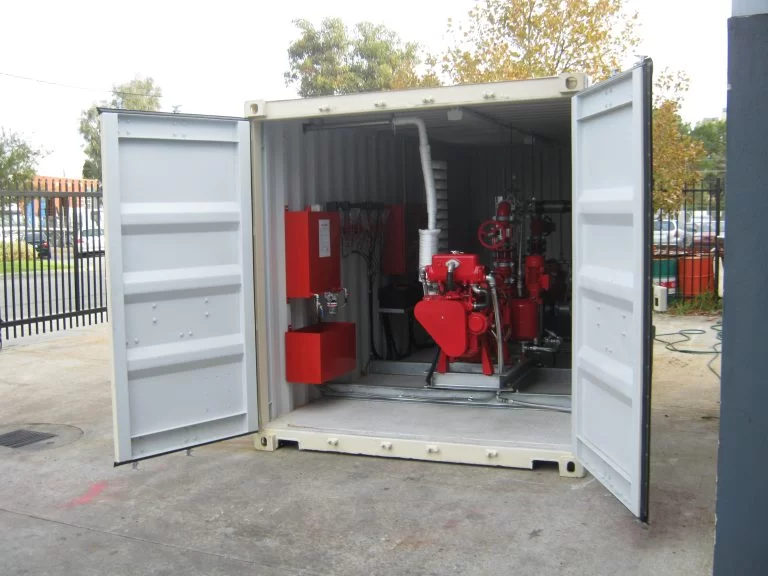
This job represented a challenge as the insurance company who are the insurers of the BUNGE Grain Terminal required that a pumpset built to a North American standard be used on the job, otherwise they would not grant insurance cover. Insurance cover was conditional upon compliance with a standard for the fire pump not commonly used in Australia. This meant that a fire pump had to be specially imported from North America to supply to the fire company fitting out the fire services on site. Allied Pumps were able to work with an overseas Supplier to arrange the build and testing of the fire pump off shore, in a factory in North America, then arrange airfreight of some very heavy packages at considerable cost in order to reduce time lost in transit, to minimise delays in the building construction deadline. A further challenge was that there is NO LOCAL BACK UP for the North American controllers. Allied Pumps was able to rise to the occasion and overcome this challenge by our highly experienced technicians making contact with an overseas electrical technician to gain the knowledge necessary to overcome certain control panel commissioning obstacles. A fine outcome on a very challenging job!

It’s been 25 years, and the Bickley Booster Pump Station is still going strong. In 1992, we took on this project. This challenge began with the need to solve a low-pressure problem in the Orange Grove area. A dual pump system operating on a variable speed control was installed. This included the base, pipework, valves, control system and pressure vessel. The pump set is still functioning correctly and addressing the original issue. This project represents the quality and endurance of our pump systems.
Yes, the standard size is 4,000 L but the fuel tank capacity can be customised on request to suit generator size, operating hours, and refuelling frequency.
Yes, Allied Pumps diesel generator fuel tank packages are designed for harsh mine-site conditions, including remote locations, dust, high ambient temperatures, and heavy-duty operating environments.
Yes, Allied Pump’s diesel generator fuel tanks can be used with any generator brand, not just ours.
Yes, our diesel generator fuel tanks come with a skid-mounted design with forklift pockets for relocation and ease of transport across site.
Yes, by increasing available fuel storage and reducing refuelling frequency, diesel generator fuel tanks can help minimise interruptions to generator operation.